


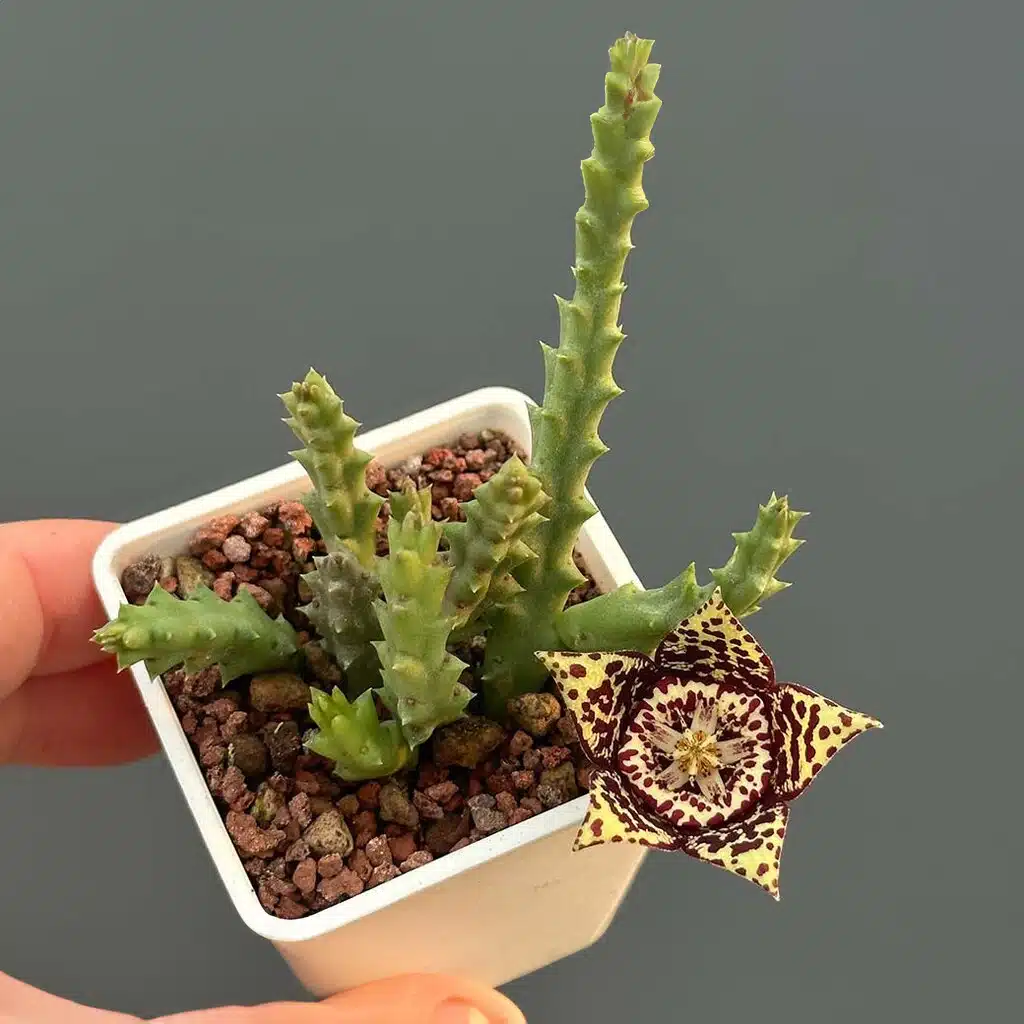
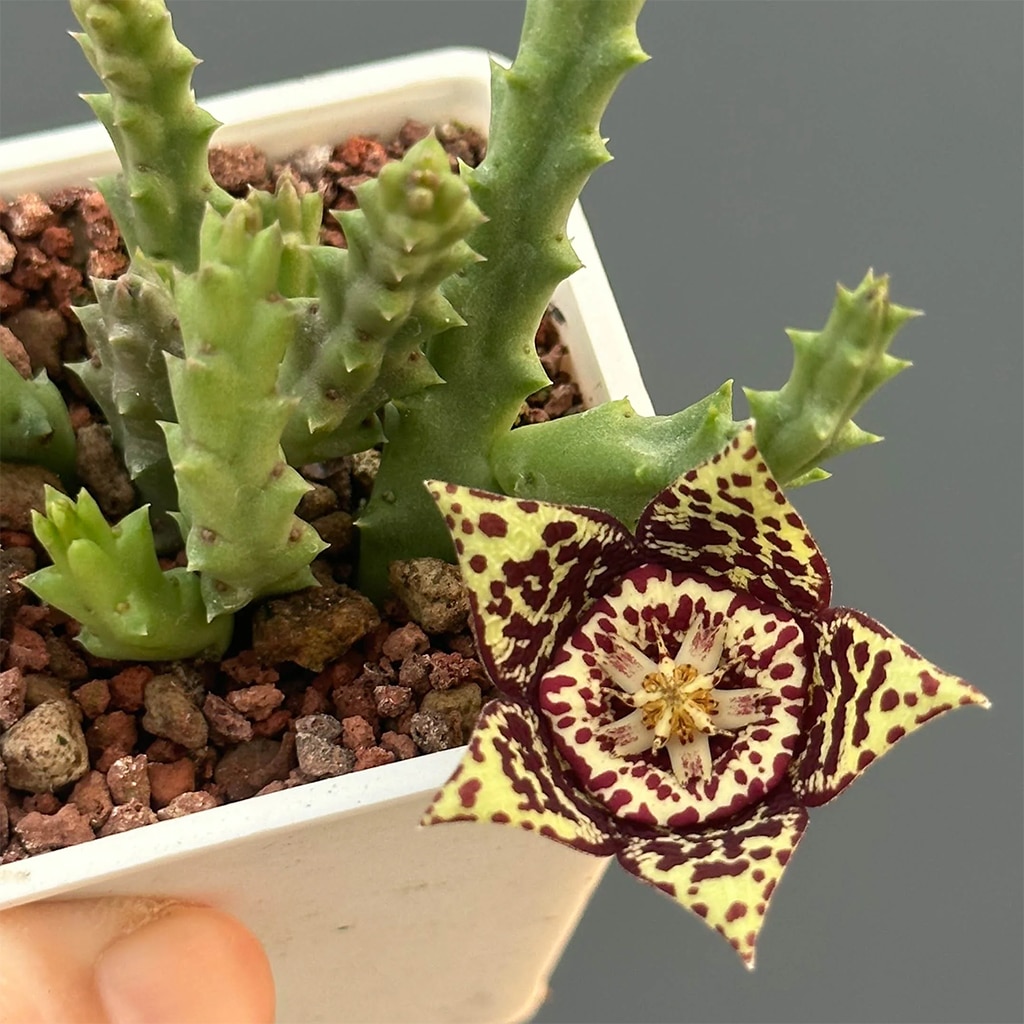
Orbea variegata
Scientific name: Orbea semota var. orientalis
Common names: Starfish Plant, Starfish Flowers, Carrion Flowers.
Natural habitat: Orbea variegata is native to the arid landscapes of Southern Africa, where it has adapted to thrive in dry, challenging environments.
Flowers: The flowers of Orbea variegata display a remarkable pattern, with petals that are cream-colored and adorned with burgundy speckles. They are around 1.5 to 2 inches (3.8 to 5 centimeters) in diameter, making them a bold decorative element.
Stems: The green stems of the Orbea variegata grow up to 6 inches (15 centimeters) tall and are speckled with lighter green and grayish tones, giving the plant a textured appearance that complements its striking flowers.
$3.00

International shipping all year round
Live Arrival Guarantee with Dragon Courier
Free phyto for orders >100USD (value $19.50)

Orbea variegata is a striking plant with intricate, starry flowers that blend seamlessly into any succulent garden or home interior. The patterned blooms, with their rich hues and captivating design, are not only aesthetically pleasing but also reflect the plant’s resilience and adaptability. It’s an ideal choice for those seeking to elevate their indoor green spaces with minimal care requirements.
General Care for Stapeliads
Stapeliads are a unique group of succulent plants known for their striking flowers and interesting forms. They belong to the Apocynaceae family and are mostly native to Africa, with some species found in Asia and the Middle East. Here’s a general guide to caring for Stapeliads:

- Lighting: Stapeliads thrive in bright, indirect light. Direct sunlight can be harmful, especially during the hottest parts of the day. A partially shaded spot is ideal.
- Watering: These plants require moderate watering. Allow the soil to completely dry out between waterings. Over-watering can lead to root rot, so it’s essential to ensure good drainage.
- Soil: Use a well-draining cactus or succulent mix. Stapeliads prefer a soil mix that allows for good air circulation around the roots.
- Temperature: Most Stapeliads prefer warm temperatures and are not tolerant of frost. Keep them in temperatures above 6-8°C (43-46°F).
- Humidity: Stapeliads generally do well in average room humidity. However, during the growing season, a slight increase in humidity can promote healthier growth.
- Fertilization: Feed sparingly during the growing season. Use a balanced, water-soluble fertilizer at half strength.
- Propagation: Propagation can be done through stem cuttings or seeds. Allow cuttings to dry before planting.
- Pests and Diseases: Watch out for pests like mealybugs and take precautions against snails and slugs. Stapeliads are generally resistant to diseases if well taken care of.
Specification: Orbea variegata
| Weight | 0.55 lbs |
|---|


There are no reviews yet.